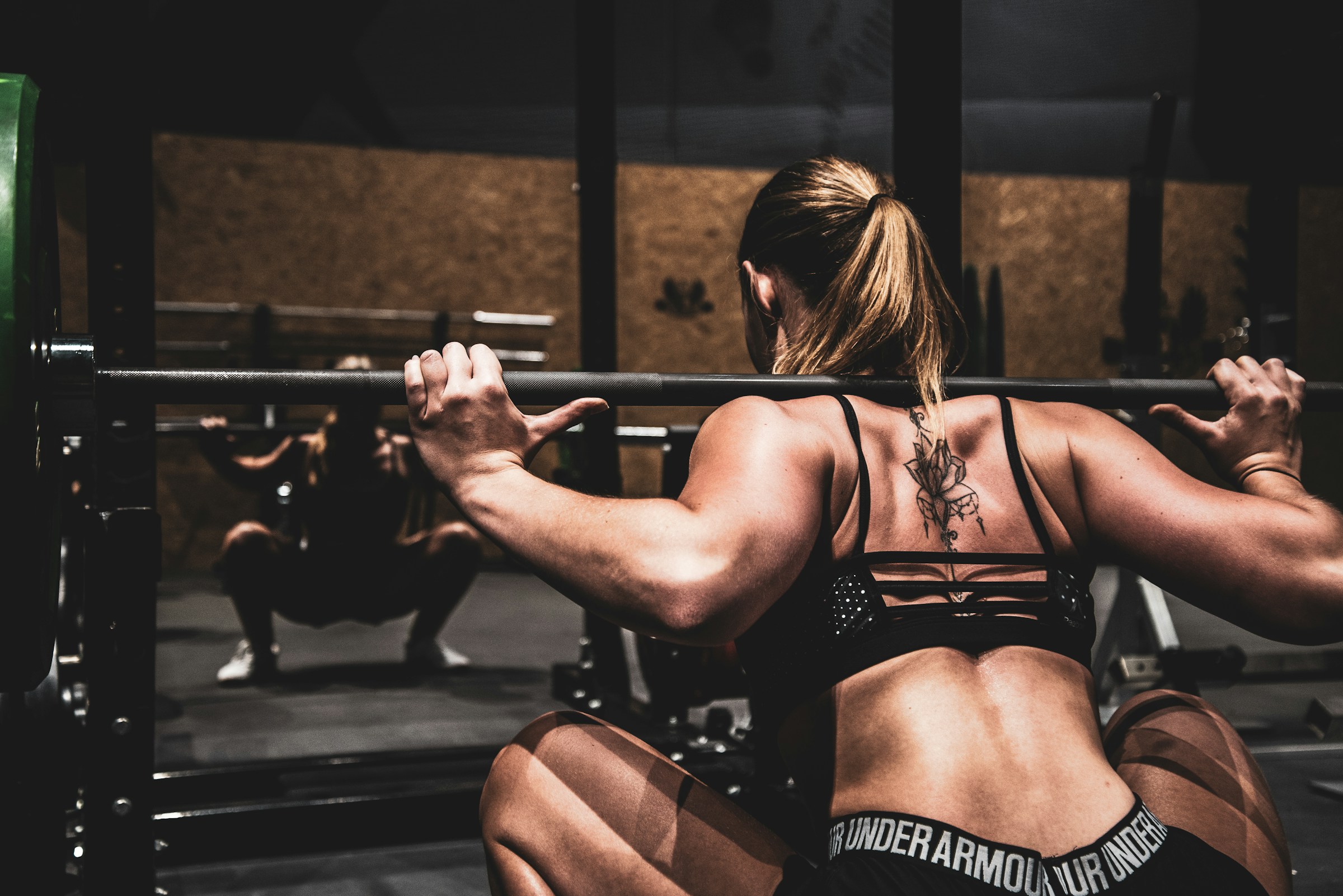
You go down into a squat and stop halfway, with your knees wanting to cave in and your back rounding? Or maybe you can get down but your hips feel so locked that every rep is a battle? You're not alone. Hip mobility is probably the most common limiting factor in the squat — and the good news is it can be improved with consistency and the right exercises.
Table of contents
Why hips matter so much in the squat
The hip joint is one of the most complex in the human body: a ball rotating inside a socket, with the ability to move on all planes. When this joint is stiff or limited, the body finds compensations — and in the squat, these compensations come at a price.
With locked hips, the pelvis can't rotate properly during the descent. The result? The infamous "butt wink," that rounding of the lower back that appears at the bottom of the squat. Not only is it inefficient — it's potentially dangerous, especially under heavy load.
But it doesn't end there. Stiff hips mean knees that cave in, weight shifting to the toes, and an inability to keep the chest up. If you recognize at least one of these issues, your hips probably need some attention.
How to tell if you have a mobility problem
Before jumping into a stretching routine, it's worth understanding where you're restricted. Not all tightness is the same, and working on the wrong thing will waste your time.
Test 1: Bodyweight squat
Get into squat position with feet shoulder-width apart, toes slightly turned out. Go down as far as possible while keeping your heels on the ground and your back straight. If you can't get below parallel without compensations, you have a mobility problem.
Test 2: Deep squat hold
Try holding a deep squat position for 60 seconds. If you struggle to maintain the position, if your knees shake or if you need to hold onto something to avoid falling backward, your hip mobility is insufficient.
Test 3: 90/90 sit
Sitting on the floor, position one leg bent at 90° in front of you and the other bent at 90° behind. Can you sit with both hips on the ground without leaning your torso? If one or both hips lift up, you have a rotation limitation.
Unlocking the hip flexors
We spend hours sitting — at desks, in cars, on couches. This position chronically shortens the hip flexors, particularly the psoas and rectus femoris. When these muscles are short and tight, they prevent the hip from fully extending and limit squat depth.
Key exercises:
- Couch stretch: Knee on the ground against a wall or box, back foot up. Keep your torso vertical and push your hip forward. 2 minutes per side.
- Half-kneeling hip flexor stretch: Lunge with back knee on the ground. Squeeze the glute of your back leg and gently push your hip forward. 90 seconds per side.
- Banded hip distraction: With a heavy resistance band anchored low, place the band in the hip crease and step away to create tension. Hold the lunge position while the band "distracts" the joint. 60-90 seconds per side.
Improving external rotation
For a deep and stable squat, the knees need to track in the direction of the toes — and this requires external rotation of the hip. If this capacity is limited, knees cave in, creating stress on the joints and loss of power.
Key exercises:
- 90/90 stretch: From the 90/90 test position, lean your torso toward the front leg while keeping both hips on the ground. Then rotate toward the back leg. 90 seconds per position.
- Pigeon pose: Bring one bent leg in front of you with the shin parallel to your chest, the other leg extended behind. If possible, lean your torso forward. 2 minutes per side.
- Frog stretch: On all fours, spread your knees as wide as possible keeping feet in line with knees. Gently push your hips back. 2 minutes.
- Cossack squat: Not just stretching but also dynamic strengthening. Alternate deep lateral squats, keeping one foot flat and the other with toes pointing up. 10 reps per side.
A 10-minute pre-squat routine
Don't have time for 30 minutes of mobility? This focused routine is perfect before a squat session. You can use it as part of your pre-WOD warm-up when the workout includes heavy squats.
The sequence:
- World's greatest stretch: 5 reps per side (alternating)
- Deep squat hold with oscillations: 60 seconds (move around, don't stay static)
- Cossack squat: 8 reps per side
- Banded hip distraction: 45 seconds per side
- Goblet squat with pause at bottom: 5 reps with 3-second pause
The "world's greatest stretch" is an exercise that combines multiple elements into one: lunge, torso rotation, hip opening. Start in plank position, bring one foot next to the corresponding hand, rotate your torso toward that leg with your arm reaching to the sky, then bring your elbow toward the floor. Return to plank and repeat on the other side.
How long before you see results
Mobility doesn't improve in a week. It's an adaptation of connective tissues — tendons, ligaments, fascia — that takes time and consistency. If you expect immediate results, you'll be disappointed.
With consistent practice of 10-15 minutes per day, most people see significant improvements in 4-6 weeks. But "consistent" is the key word: 15 minutes every day beats 2 hours once a week.
Some practical tips:
- Work on mobility when muscles are warm — after training or after brief cardiovascular activity
- Never force into painful positions. Discomfort yes, sharp pain no
- Combine static stretching (held) with dynamic mobility (controlled movement)
- Document your progress: film your squat weekly to see changes
Remember that mobility is just one piece of the puzzle. Technique matters enormously too — and often what looks like a mobility problem is actually a fundamental mastery issue. An experienced coach can help you distinguish between the two and work on what you actually need.
A deep squat isn't a luxury reserved for a genetically gifted few. With patience, consistency and the right exercises, almost everyone can get there. And when you finally go "ass to grass" without compensations, you'll feel the difference not just in your squat, but in every movement that requires power from your legs. Start today — your hips will thank you.
If you're looking for a structured program that includes specific mobility work for each session, check out our programs. Every workout is designed to prepare you optimally, from fundamentals to the most advanced movements.