Round 3 of Fran. Your arms are shaking, your legs refuse to straighten, the barbell feels three times heavier than what the plates say. And in your head, one single thought: "why did I pick this sport?" If you've ever done a thruster under fatigue, you know exactly what this feels like. The thruster is that kind of movement nobody looks forward to seeing on the whiteboard — but that, like it or not, is one of the most effective and complete exercises in the CrossFit® playbook.
Table of contents
Why the thruster is so brutal (and so useful)
The thruster combines a front squat with a push press in one seamless motion. Translation: it engages virtually your entire body. Quads, glutes, core, shoulders, triceps — nothing is spared. And that's exactly why it hurts so much.
But the thruster's brutality isn't just muscular. It's metabolic. A movement that drives the barbell from below your chin to overhead through a full squat is an enormous demand on your cardiovascular system. That's why 21 thrusters at 95 lbs are enough to make you see stars — ask anyone who's done Fran.
From a training perspective, the thruster is a goldmine. Strength, power, muscular endurance, aerobic capacity — all in a single exercise. You'll find it in WODs, in competitions, in HYROX programs adapted with dumbbells. It's everywhere for a reason.
The technique: two movements, one fluid motion
On paper it looks simple: squat down, stand up and press the barbell overhead. In practice, the difference between a well-executed thruster and a sloppy one is massive — in terms of efficiency, fatigue and injury risk.
The front squat
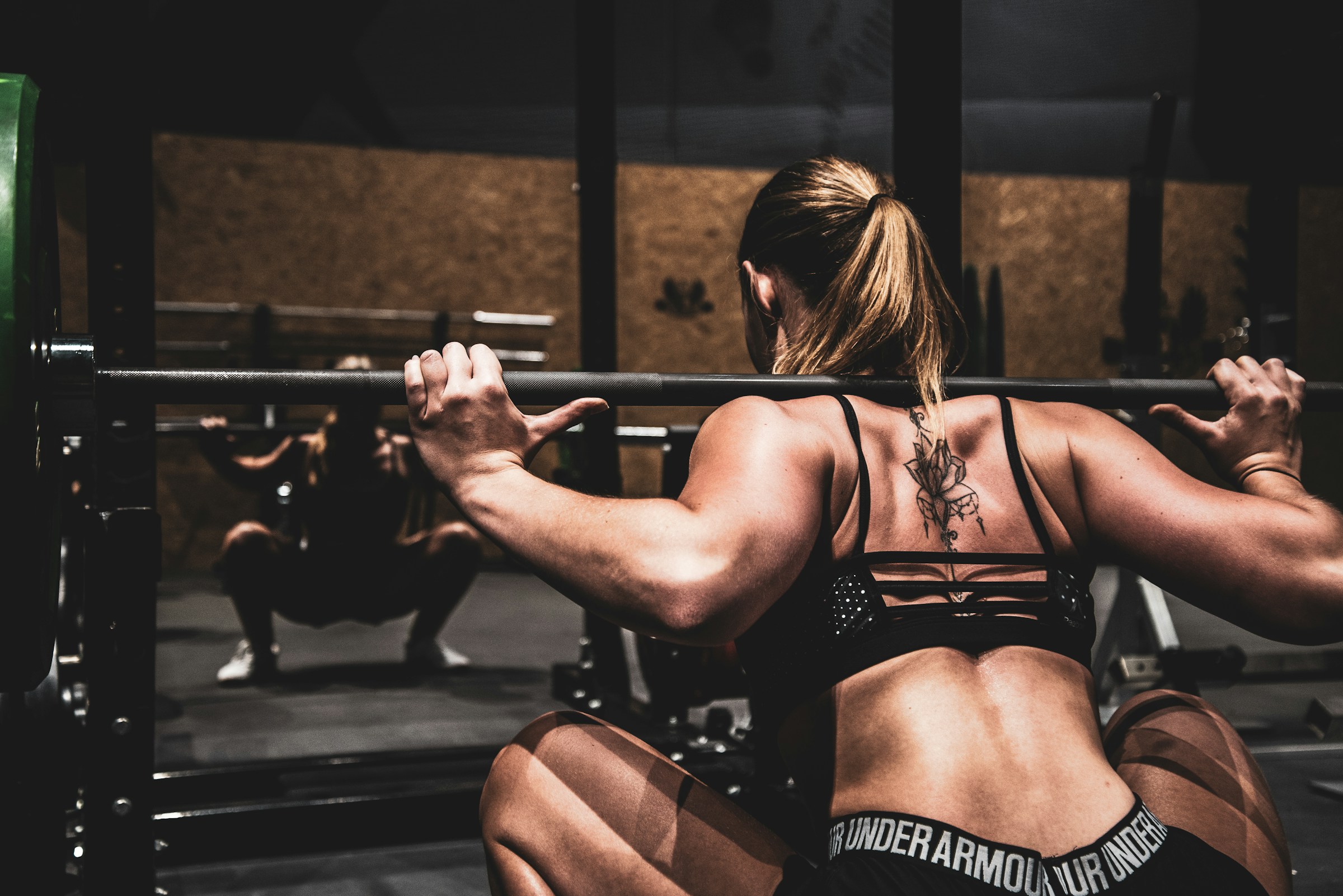
Everything starts here. The barbell rests on the shoulders, elbows are high, torso is vertical. The descent should be controlled, with knees tracking over the toes and hips dropping at least below parallel. If your deep squat is still a problem, the thruster will only amplify it.
Critical point: the elbows. If you let them drop, the barbell slides forward, the torso compensates by leaning, and the squat turns into a mess. Elbows high, chest open, core braced. Always.
The transition
This is where the game is won. The secret of an efficient thruster is using the momentum from the squat ascent to drive the barbell overhead. These aren't two separate movements — it's one continuous motion. The legs lead, the arms finish.
Think of it as trying to launch the barbell towards the ceiling with your leg power. The arms only kick in once the bar has already started moving. If you find yourself pressing hard with your shoulders from the bottom, you're wasting energy.
The lockout
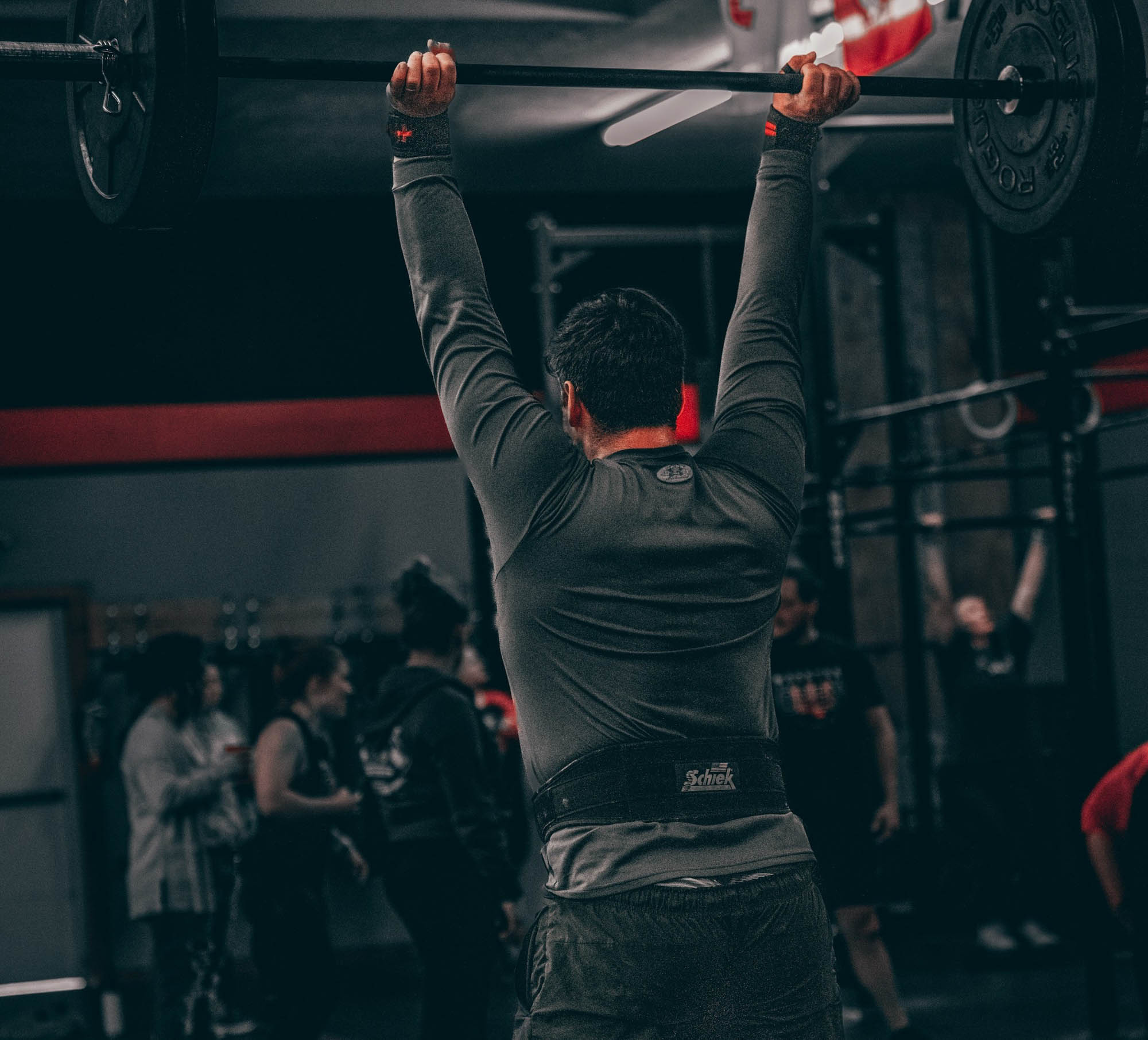
At the top, arms fully extended, barbell over the center of your foot, head slightly forward. This is the stable position where you can steal a breath — and you need that breath. An incomplete lockout with bent elbows or the barbell too far forward costs you no-reps in competition and wasted energy in training.
The mistakes that cost you dearly
After years watching thrusters in boxes, certain mistakes keep coming back. Here are the ones that do the most damage:
- Separating the squat and the press — You squat, stop, then press. Two distinct movements instead of one. Result: double the fatigue, half the efficiency. The thruster should be fluid, a wave from bottom to top
- Low elbows in the front rack — The bar slides, the torso compensates by leaning forward, the squat position collapses. If your wrist and shoulder mobility doesn't allow a proper front rack, work on it before loading up
- Going too heavy too soon — The thruster is a technical movement before it's a strength movement. Master the mechanics with an empty bar, then at 65 lbs, then increase. Ego doesn't improve technique
- Not using the hips — The legs must generate the primary impulse. If you feel your shoulders more than your legs after a set of thrusters, your mechanics are off
- Chaotic breathing — Inhale on the way down, exhale forcefully during the drive. Losing your breathing rhythm is the fastest way to blow up metabolically
Strategies to survive thrusters in WODs
Knowing how to do a technically sound thruster is one thing. Doing 45 of them in a WOD without crashing is a completely different story. Here are some strategies that actually work.
Pacing matters more than weight
In a workout like Fran (21-15-9 thrusters and pull-ups), the temptation is to go all out from the start. Don't. The first 10 thrusters will feel easy. The next 11, much less so. The winning strategy is to start at a sustainable pace — slightly below maximum — and hold it until the end. Those who go all-out right away end up staring at the barbell on the floor during round 2.
Break up sets intelligently
With high-volume thrusters, unbroken sets aren't necessarily the best choice. 21 thrusters can become 12-9, or 7-7-7. The key is keeping rest between sets short — 3-5 breaths, not 30 seconds staring into space. Breaking with calculated micro-pauses keeps you fresher than a long set that destroys you.
The front rack is your rest position
Here's a trick beginners don't know: when you need to breathe during a set, don't drop the barbell. Hold it in the front rack, take 2-3 deep breaths, then go again. Putting the bar down and picking it back up costs more energy than you think — the clean from the floor, resetting your position, the time lost. If you can keep the bar on your shoulders, do it.
Program thrusters into your training
Don't wait for thrusters to show up in the WOD to practice them. Include them regularly in your training — both as light skill work for technique and as a metabolic piece. A structured program plans cycles where the thruster is progressively loaded and integrated with other movements, so when it appears in the workout, you're already prepared.
The thruster will always be that movement that makes athletes groan when it shows up on the board. That's just the nature of the beast. But the difference between suffering aimlessly and suffering with purpose comes down to technique, strategy and preparation. Master the fundamentals, respect the progression, and next time you read "thruster" on the whiteboard, at least you'll know exactly how to tackle it. Sure, it'll still hurt. Just a little less.