"150 wall balls for time." The coach writes Karen on the whiteboard and your legs are already trembling at the thought. The first 20 reps go smoothly, then something breaks: your breathing goes into debt, your quads burn, the ball starts falling short. By rep 50, you're already thinking about quitting and finding a new hobby. Yet someone next to you looks almost bored. What do they know that you don't?
Table of contents
Why wall balls hurt so much
The wall ball seems like a simple movement: squat, throw, catch. But it's exactly this apparent simplicity that's deceptive. In reality, you're combining a full squat with an explosive push press, repeated dozens or hundreds of times. Every single rep engages quadriceps, glutes, core, shoulders and triceps — basically your entire body.
The real problem isn't muscular, it's metabolic. Wall balls send you into the red zone cardiovascularly very quickly because they require continuous work without real breaks. Unlike a heavy deadlift where you can breathe between reps, here the ball comes back at you and you need to be ready. It's this aerobic component that destroys most people.
The technique that saves your legs
The right squat
Many athletes go too deep in wall balls, wasting precious energy. You don't need to go "ass to grass" — reaching parallel depth (hip crease at knee height) is enough for a valid rep. Every extra centimeter toward the floor is wasted energy that you'll miss at rep 80.
- Stance: feet slightly wider than shoulder-width, toes rotated 15-30°
- Weight on heels: never on toes, or you lose power on the way up
- Knees: track over toes, don't collapse inward
- Torso: as vertical as possible to reduce lower back strain
The efficient throw
The ball isn't thrown with the arms — it's pushed with the legs. The explosive hip extension generates the power, the arms only guide the direction. If you feel your shoulders burning before your legs, you're using too much arm.
The ball should be held under the chin, elbows low and close to the body. At the moment of the throw, your hands accompany the ball upward with a fluid motion, they don't actively "push" it. The force comes from below.
The catch
This is where the game is won. The most common mistake is waiting for the ball standing up and then descending into the squat. The correct movement is to start descending while the ball is still in the air, so you catch it already in the low position and use its weight to help the descent. It's a continuous cycle, not a sequence of separate movements.
Breathing: the hidden secret
Breathing in wall balls is everything. A wrong pattern puts you into oxygen debt in 30 seconds. Here's the method we teach in Virtuosity programs:
- Inhale during the squat descent
- Exhale during the throw and while the ball is in the air
- Never hold your breath — it only leads to hypoxia
One breath per rep. If you start breathing faster, you're going too hard and need to slow down. Breathing is your natural metronome: follow it, don't fight it.
Mistakes that cost you energy
1. Standing too far from the wall
The farther you are, the more you have to throw forward as well as up. Position yourself about an arm's length from the target. The ball should rise almost vertically.
2. Watching the ball
Looking up to follow the ball puts your neck in hyperextension and breaks spinal alignment. Look at the target, not the ball. You know where it's going.
3. Straight arms on the catch
Catching with straight arms means absorbing all the impact with shoulders and wrists. Your elbows should be bent, ready to absorb. Think about "catching" the ball, not stopping it.
4. Losing the rhythm
The wall ball is a cyclical movement. Every pause to reposition, every lateral step to correct your position, every second of hesitation before the throw — all of this accumulates extra fatigue. Find your rhythm and maintain it.
Pacing strategies
Karen (150 wall balls for time) is the ultimate test. Reference times according to CrossFit® Games range from 4 minutes for elites to 10+ minutes for beginners. But the secret isn't starting fast — it's starting sustainably.
For beginners: the set strategy
- Sets of 10 reps with 10-15 seconds rest
- Don't put the ball down — hold it at your chest during breaks
- Goal: maintain the same pace from start to finish
For intermediate athletes: the 70% rule
Start at 70% of your maximum speed. If you think you can do sets of 25, do 15-20. You'll save precious energy for the second half, when everyone else is slowing down drastically. As we often say: less but better applies here too.
For competitors: unbroken or bust
Advanced athletes aim to never stop. But even for them, pace matters: one rep every 2 seconds is a good target. That means a Karen under 5 minutes, a respectable time in any competition.
How to train to improve
Wall balls improve by doing them. There's no shortcut. But a structured program can significantly accelerate your progress.
Capacity work
- EMOM 10: 15 wall balls per minute — builds endurance
- For time: 3 rounds of 50 wall balls, 400m run — simulates competition fatigue
- Tabata wall balls: 20 seconds work, 10 rest for 8 rounds
Power work
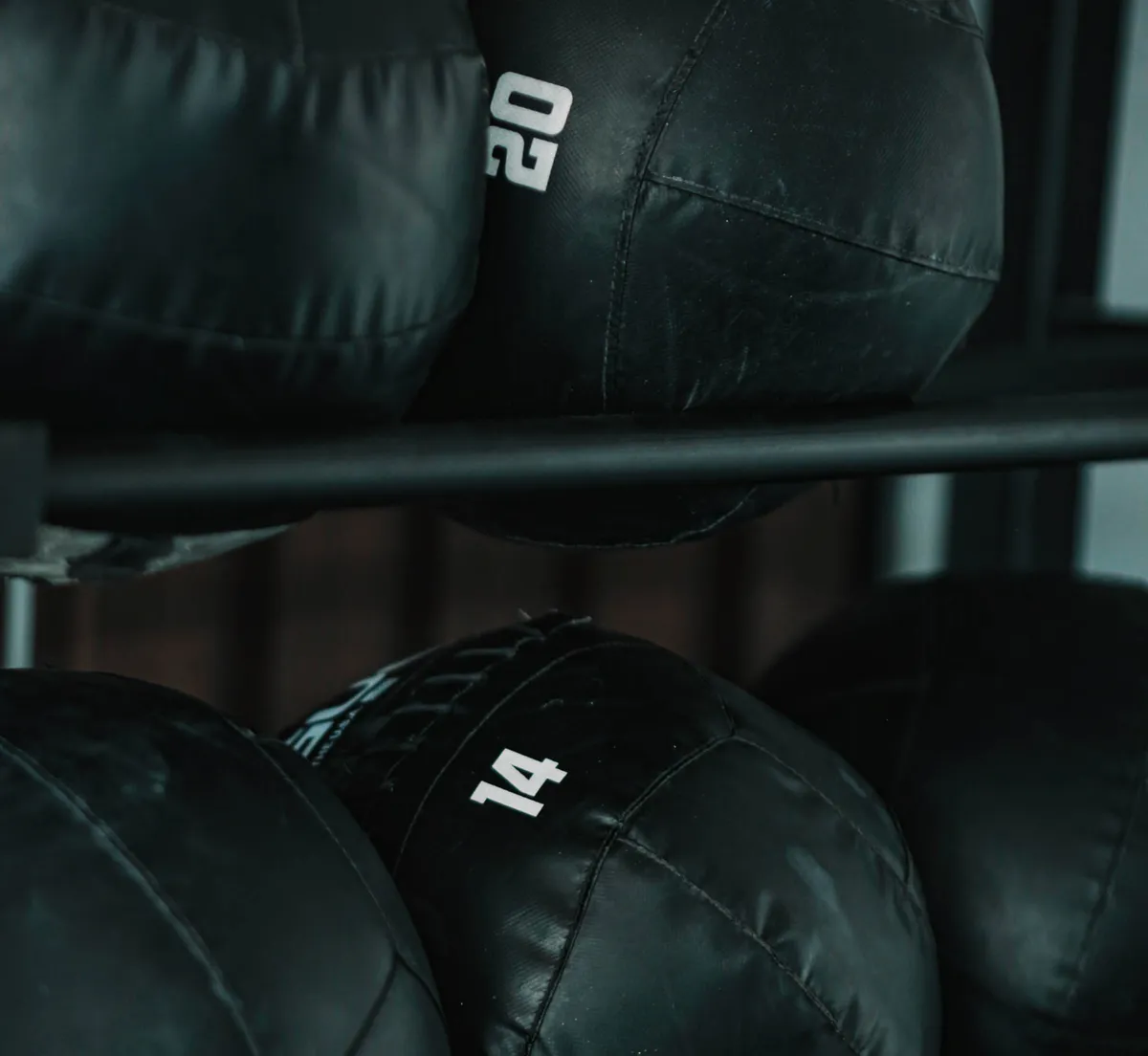
- Wall balls with heavier ball (12-14 kg men, 8-10 kg women)
- Higher target than normal to increase explosiveness
- Heavy front squats to build leg strength base
Specific mobility
If you can't maintain a vertical torso in the squat, work on ankle and hip flexor mobility. A good warm-up with mobility before wall balls can make a huge difference.
In the end, the wall ball is a democratic movement: it makes everyone suffer, from beginners to Games athletes. The difference lies in the ability to suffer efficiently — wasting as little energy as possible on each single rep, breathing when others go into apnea, slowing down when needed to speed up when it counts.
Next time Karen appears on the whiteboard, don't think about all 150 reps. Just think about the next one. Squat, throw, catch. Breathe. Repeat. You've got this.