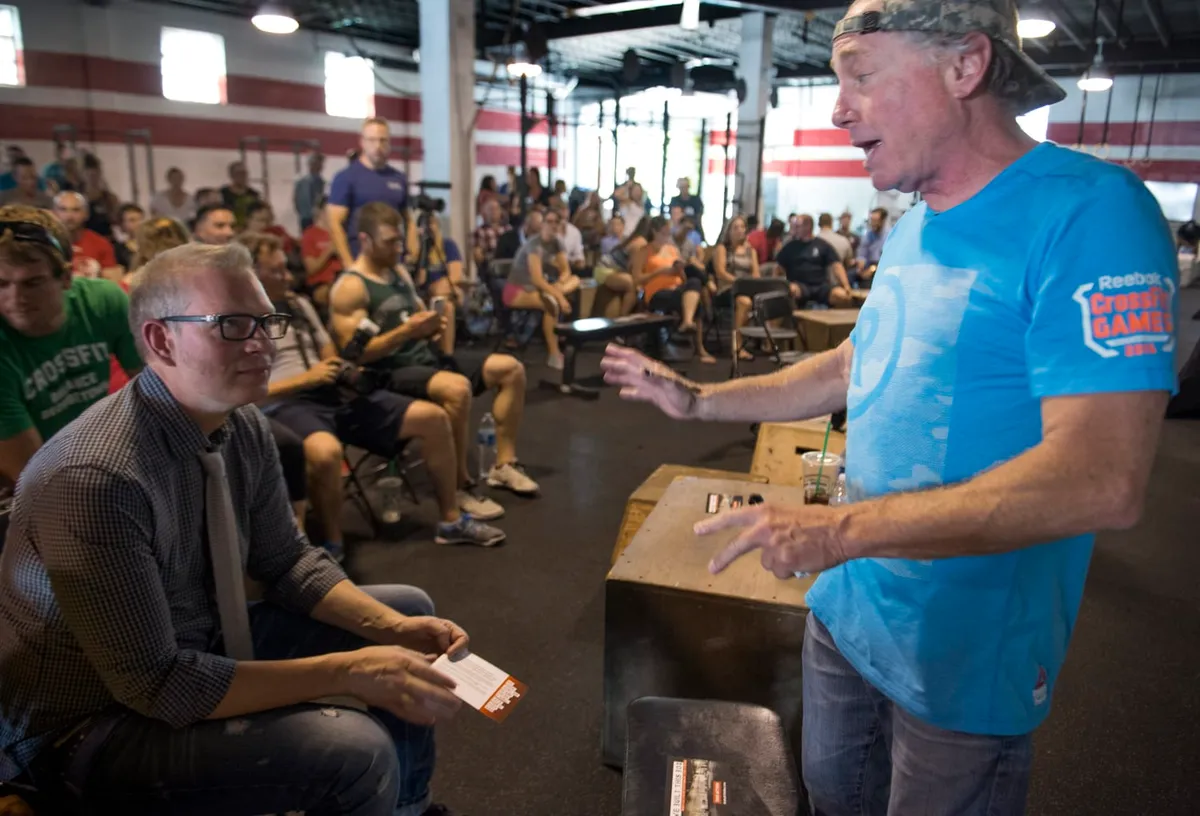
You've read about it online, watched some videos on Instagram, maybe a friend told you about it with that unmistakable sparkle in their eyes. You've decided: this week, you're walking into a CrossFit® box. But you don't really know what to expect. Don't panic — here's the unfiltered guide to surviving (and enjoying) your first days.
Table of contents
Before you even walk through the door
The first thing you'll notice approaching a box is that it doesn't look like any gym you've seen before. No mirrors everywhere, no shiny machines lined up in rows. What you'll find is an open space with barbells, kettlebells, ropes, pull-up rigs, rowers and a rubber floor. The smell? A mix of chalk, sweat and rubber. Some find it off-putting, others grow familiar with it fast.
Most boxes offer a free trial class or an introductory session — often called "On Ramp" or "Foundations." Don't skip it. It's not a formality: it's where you learn the fundamental movements (squat, deadlift, press) with a coach correcting you in real time. Even if you think you already know how to squat, trust us: there's probably something to fix.
Day 1: baptism by fire
You show up. The coach welcomes you, asks about your athletic background, any injuries. Then explains how the class works. It typically follows this structure:
- Warm-up (10-15 min): mobility, activation, bodyweight movements
- Skill or strength (15-20 min): technical work on a specific movement or strength portion
- WOD (10-20 min): the workout of the day, the part that'll show you why everyone talks about it
- Cool-down (5 min): stretching and recovery
The WOD might be an AMRAP (as many reps as possible in a given time), a For Time (complete the work as fast as possible) or an EMOM (a set every minute). If these acronyms mean nothing to you, no worries — the coach explains everything before you start. For a deeper dive into what a class looks like, check out our article on what CrossFit® is.
One important thing: don't try to impress anyone on day one. Everyone there has been where you are. The coach will offer scaled (adapted) versions of the exercises. Accept them. It's not weakness — it's intelligence.
Your first WODs: humility and patience
Your first WOD will probably leave you on the floor. Literally. You might end up lying on the rubber staring at the ceiling wondering what brought you there. That's normal. It happens to everyone, from experienced runners to seasoned bodybuilders.
CrossFit® trains capacities most people never work on: the combination of strength, cardiovascular endurance, mobility, coordination and power in the same workout. Your body isn't used to this kind of stimulus, and it will let you know.
In the first few days, focus on three things:
- Technique first — the weight can wait
- Breathing — learn not to go into oxygen debt in the first 2 minutes
- Pacing — start slow to finish strong, not the other way around
A solid warm-up makes the difference between a manageable WOD and one where you blow up after 3 minutes. Never skip the warm-up, even if you're running late.
Your body will talk (loudly)
Brace yourself for DOMS — Delayed Onset Muscle Soreness, those muscle aches that hit 24-48 hours after training. After your first class, you'll probably struggle to sit down, climb stairs or raise your arms to wash your hair. It's your body adapting to new stimuli.
Here's how to manage the first few days:
- Don't train 5 days in a row the first week — 3 sessions with rest days in between is more than enough
- Drink more water than usual
- Sleep well — recovery happens at night, as we explain in our article on sleep and performance
- Move on your off days: a walk or some light stretching helps with active recovery
A classic beginner mistake is wanting to come back the next day despite the soreness, to "keep the momentum going." Your body needs time to adapt. Long-term consistency beats first-week enthusiasm every time.
The community: the real engine
There's one thing that sets a box apart from any other gym: the people. In a box, you don't put on headphones to shut out the world. You train with others. You suffer with others. You celebrate a PR with others.
From day one, you'll notice that people actually talk to each other. The person deadlifting 150 kg will cheer you on during your WOD with 40 kg. The woman doing muscle-ups will give you tips on pull-ups. There's no judgement — there's respect for anyone who shows up and gives their best, regardless of level.
This is probably the number one reason people stay. Not the training itself (though that helps), but the sense of belonging. When someone asks "How did it go today?" after class, they actually mean it.
What to bring and what to skip
For the first few days, you don't need astronaut-level equipment. Here's the essentials:
Bring:
- Training shoes with a flat, stable sole (avoid overly cushioned running shoes)
- Comfortable clothing that allows free movement
- A water bottle (a big one)
- A towel
Skip:
- Gym gloves — in CrossFit® you work bare-handed to develop grip strength (calluses will come, it's part of the game)
- Expensive supplements — you don't need them to start, just eat well
- Your ego — leave it at the door, it's the heaviest baggage you can carry
After the first week
If you've made it through the first week and you're already thinking about the next class, that's a good sign. CrossFit® has that effect: the more you do it, the more you want to do it. Not because it's easy, but because you see progress quickly. Your first clean squat, your first WOD completed without scaling, the first time you string together double-unders — every small victory counts.
At this point, you might wonder if it's worth following a structured program alongside the classes. The answer depends on your goals: if you just want to stay fit and have fun, classes are enough. If you have competitive ambitions or want to work on specific weaknesses, a supplementary program can accelerate progress. To figure out which approach is right for you, our FAQ is a good starting point.
One thing is certain: the person who walks out of the box on Friday evening won't be the same one who walked in on Monday morning. Not physically — one week doesn't transform your body. But mentally, something will have shifted. You'll have discovered what you're capable of when you stop overthinking and start doing. And that's something no traditional gym can give you.