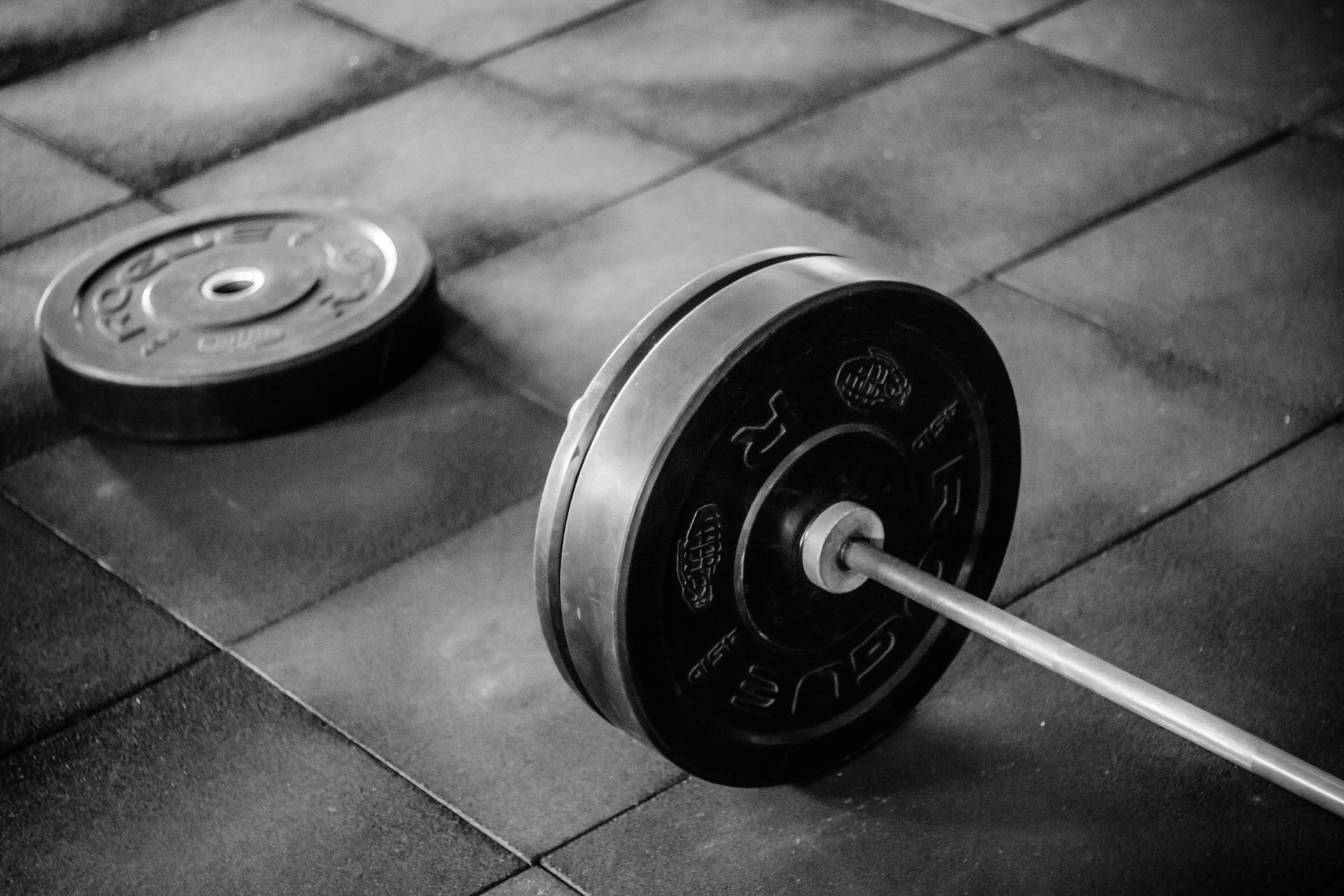
Six weeks of training six days out of seven. The weights you used to lift without a second thought now feel glued to the floor. You wake up tired, fall asleep late, and that knee that never bothered you now burns with every squat. You think you need to push harder. In reality, the problem is the opposite: you're doing too much, and your body is screaming it in your face.
Table of contents
What overtraining really is
Let's clear things up, because there's a lot of confusion. Overtraining isn't simply "feeling tired after a hard week." That's normal fatigue — the body responding to stimulus and adapting. True overtraining, scientifically known as overtraining syndrome (OTS), is a chronic imbalance between training load and recovery capacity that persists for weeks or months.
According to a review published in Sports Health, OTS is distinguished from simple overreaching (temporary overload) by the duration of symptoms: with overreaching, a few days of deload are enough to bounce back. With true overtraining, recovery takes weeks — sometimes months. And the longer you ignore it, the deeper the hole you have to climb out of.
In CrossFit® and high-intensity disciplines like HYROX, the risk is particularly high. The "more is better" culture, constant leaderboard comparison and the desire to improve your time or load push many athletes — from beginners to seasoned competitors — to regularly cross the red line.
The warning signs your body sends
The body doesn't break down overnight. It warns you first, with signals that too often get ignored or mistaken for laziness.
Physical signs
- Persistent performance decline — Not a bad day, but weeks where your times worsen and loads drop despite the effort
- Chronic fatigue — You wake up already exhausted, even after 8 hours of sleep. Your legs feel heavy before you even touch the barbell
- Joint pain that won't go away — That shoulder or knee pain that used to disappear in a day now takes a week
- Elevated resting heart rate — If your morning heart rate is 10-15 bpm higher than usual, it's a clear alarm signal
- Getting sick often — Frequent colds, recurring sore throats. The immune system is compromised by chronic stress
Mental and emotional signs
- Loss of motivation — Not Monday laziness, but genuine aversion to training. The thought of walking into the box feels like a burden
- Irritability and mood swings — Everything annoys you. Patience is at zero, with training partners and everyone else
- Sleep disturbances — Paradoxically, the exhausted body struggles to sleep. You fall asleep late, wake up often, and sleep never feels truly restful
- Difficulty concentrating — At work, in the car, during the WOD. Brain fog is a classic overtraining symptom
The most common causes
Overtraining doesn't come from excess volume alone. It's almost always a combination of factors that together create the perfect storm.
- Volume and intensity too high, for too long — Training heavy 6 days out of 7 without ever programming a deload. The body accumulates fatigue and at some point the debt becomes unsustainable. Good periodization prevents exactly this
- Insufficient recovery — Not training isn't enough to recover. You need adequate sleep, sufficient food, and stress management. Someone sleeping 5 hours, skipping meals and working 10-hour days doesn't recover, period
- Inadequate nutrition — Training at high intensity while eating poorly or too little is the perfect recipe for overtraining. The body needs fuel to rebuild — carbs and protein aren't optional
- Non-training stress — Work, family, financial worries. The nervous system doesn't distinguish between physical and mental stress. They stack up. A difficult period at work + intense training = accelerated overtraining
- Lack of programming — Doing random WODs every day without logic, without cycles, without deload weeks. Improvisation works up to a point, then the body pays the bill
How to prevent and recover
The good news: overtraining is far easier to prevent than to cure. And the strategies aren't complicated — they require discipline and humility.
Schedule deload weeks
Every 3-4 weeks of progressive loading, build in a week at reduced volume and intensity (50-60% of your usual). It's not a wasted week — it's where the body consolidates its adaptations. The world's best athletes deload regularly. Following a structured program that already integrates these phases is the simplest way to not have to think about it.
Monitor the signals
You don't need a lab. Keep an eye on three simple indicators:
- Morning heart rate — if it rises 5+ bpm above your average, pay attention
- Sleep quality — restless nights, multiple awakenings, feeling like you didn't sleep
- Motivation — when the drive disappears for more than a few days, the body is talking
Respect your rest days
A rest day is not a sign of weakness. It's an integral part of training, just like the squat or the clean. Muscles don't grow during the WOD — they grow while you rest. Aiming for 2-3 active recovery days (walking, mobility, stretching) per week is a good starting point for most people.
Take care of sleep and nutrition
It sounds basic, but most cases of overtraining we see in the community are resolved with two things: sleeping more and eating better. 7-9 hours of sleep, regular meals with sufficient protein and carbs, adequate hydration. Nothing revolutionary — just consistency.
Listen to your body, not your ego
This is perhaps the hardest point. In an environment where the clock is ticking and the whiteboard displays everyone's scores, admitting you need to slow down takes courage. But the difference between an athlete who progresses for years and one who burns out in six months lies precisely here: knowing when to push and when to take your foot off the gas.
Training hard is easy. Training smart, dosing effort over time, respecting recovery and listening to your body's signals — that's the real work. Overtraining isn't a badge of honour. It's an avoidable obstacle. And if you learn to manage your training load with the same care you bring to technique, the results will come — more solidly, more durably, and without the price of a body that one day says enough.