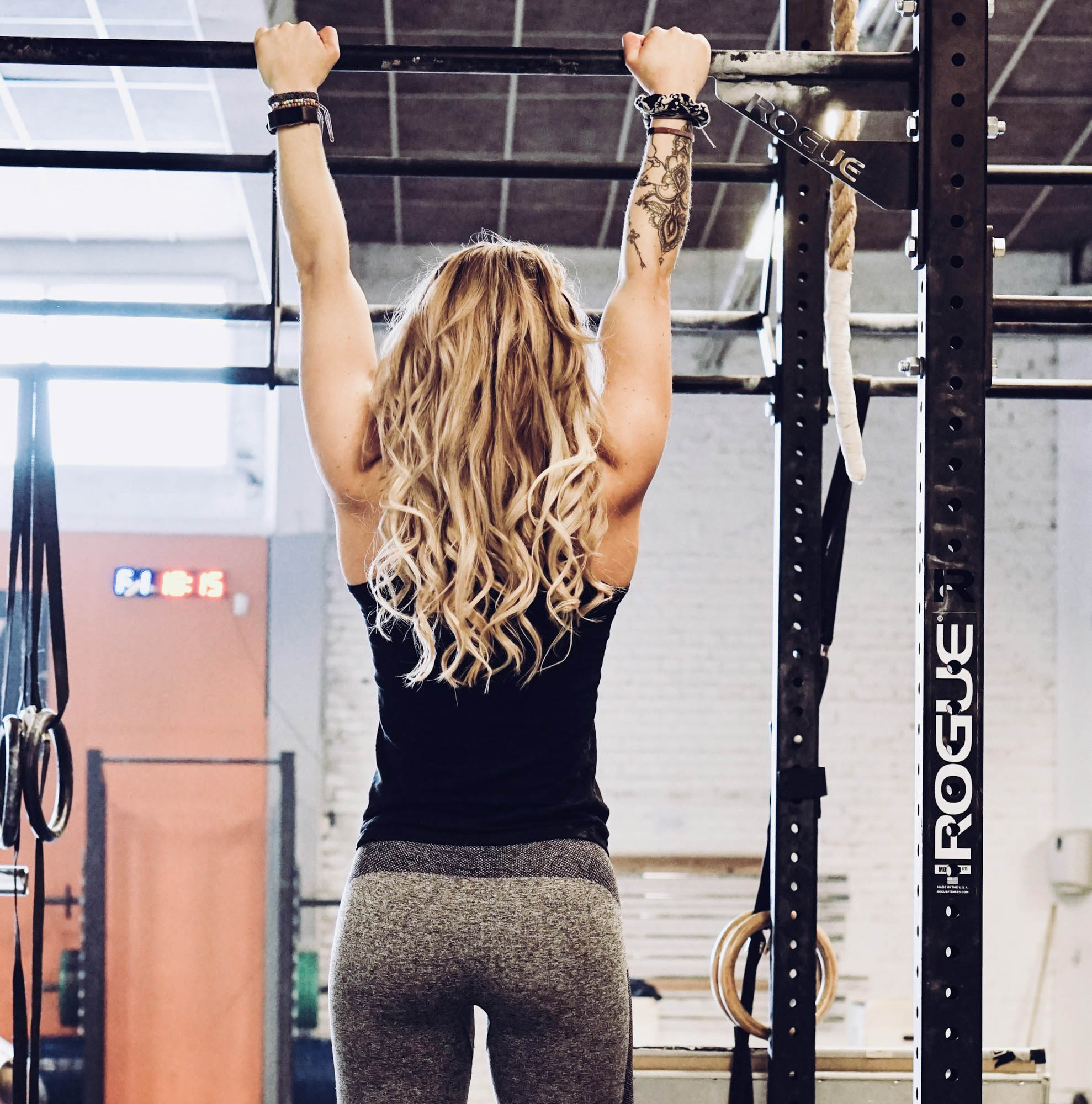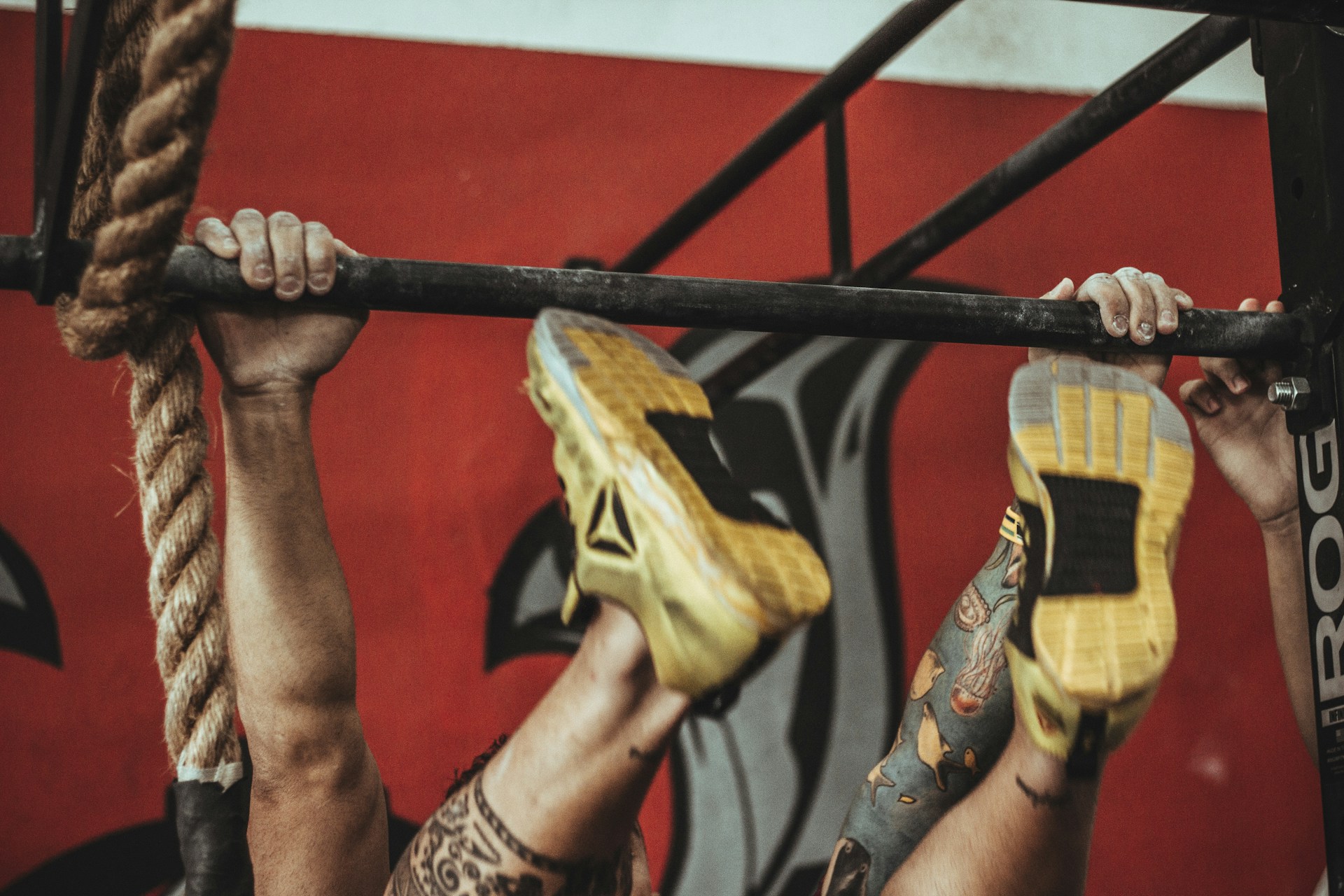
You know that moment when the coach writes "50 toes-to-bar" on the whiteboard and half the box stops breathing? The T2B is one of those movements that create a sharp divide: those who have them and those who are still chasing them. Yet unlike the muscle-up which takes years of building, toes-to-bar are more achievable than you think — as long as you understand what's actually holding you back and approach them with method.
Table of contents
Strict vs kipping: two movements, same bar
The toes-to-bar involves bringing both feet up to touch the pull-up bar from a dead hang position with arms fully extended. Sounds simple — then you try it and discover your legs stop somewhere around hip height.
The strict version is pure strength: no swing, no kip. You start from a dead hang, engage your core and lift your legs until they touch the bar. It's brutal work for your abs, hip flexors and lats. Few athletes use it during WODs because it's slow and energy-draining, but it's essential for building the foundation.
The kipping version is what you'll see in every competition and most workouts. It uses a controlled body swing — the arch and hollow position — to generate momentum and bring the feet to the bar in a cyclical pattern. It's not "cheating": it's a specific motor pattern that demands coordination, timing and a solid core to control the swing. The programme for CrossFit® has included it in 86% of Open seasons since 2011 — this is a movement you need in your toolkit.
The prerequisites nobody tells you about
Before obsessing over getting your feet to the bar, ask yourself: can you hang for 30 seconds without issues? Can you do 5-8 strict pull-ups without breaking rhythm? If the answer is no, the T2B is still a way off — and forcing it will only frustrate you.
Toes-to-bar require three things that are often underestimated:
- Grip — do your hands give out before your core? Then it's not an abs problem. Dead hangs, farmer carries and fat grip work are the answer. Target: 45-60 seconds of dead hang without opening your hands
- Lat and shoulder strength — needed to activate the "scap pull" (scapular depression) that initiates the movement. Without this, you're hanging passively and your legs have nothing to work from
- Active core, not just strong — doing 100 sit-ups isn't enough. You need the ability to engage your abs while suspended, under tension, with arms overhead. Hollow holds and V-ups are far more specific than any crunch
A proper warm-up with shoulder mobility before every T2B session is non-negotiable. Stiff shoulders = limited range of motion = guaranteed frustration.
Progressions: from dead hang to fluid T2B
The progression that actually works doesn't start with attempting the full movement and hoping it "comes together eventually". It starts with building each piece separately.
- Kipping swing — learn the arch-hollow swing on the bar. Chest forward (arch), then shoulders back and abs tight (hollow). This is the engine of the kipping T2B — without a solid kip, nothing else works
- Knees-to-chest — from the swing, bring your knees to your chest. Not to the bar, just to your chest. Focus on pulling your hips towards your hands using your abs, not your legs
- Knees-to-elbows — same mechanics, but the knees touch the elbows. Requires more amplitude in the swing and more core strength. If you can string 10 together without losing rhythm, you're almost ready
- Single toes-to-bar — finally, extend your legs and bring your feet to the bar. Don't try to string them together straight away. One rep at a time, clean, with feet actually making contact
- Cycling toes-to-bar — once singles are solid, start working on rhythm. The secret is in the "pushaway": as soon as your feet touch the bar, actively push your hands forward to return to arch position and start the next rep
Each step takes weeks, not days. A structured programme integrates this progressive work without destroying your hands and shoulders in endless sessions on the bar.
The mistakes keeping you stuck
After watching hundreds of athletes struggle with this movement, certain errors repeat themselves systematically:
- Pulling with bent arms — arms must stay extended throughout the entire movement. If you bend them, you lose the leverage effect and the body doesn't swing — you're doing a disguised pull-up, not a T2B
- No kip, just legs — trying to lift your legs with pure strength without using the swing is the fastest way to burn out. The kipping T2B is a rhythmic movement, not a brute force exercise
- Losing rhythm after 3-4 reps — almost always the problem is in the pushaway. If you don't actively push your hands forward after feet touch the bar, the swing dies and you have to restart from scratch
- Death grip — squeezing the bar with the force of a thousand suns drains your forearms in 10 reps. Relaxed but secure grip, thumbs around the bar, and learn to use the hook grip if needed
- Head back — looking at the bar or the ceiling breaks the hollow position and slows your legs. Your gaze should stay neutral or slightly downward, especially during the hollow phase
Toes-to-bar appear in virtually every CrossFit® competition — from the CrossFit® Open to the Quarterfinals. They're not a "bonus" movement: they're a requirement. The good news? With the right progressions and the patience to build each piece, going from zero T2B to unbroken sets of 15-20 is absolutely possible. Like the muscle-up, the day the movement "clicks" — feet flying to the bar effortlessly, steady rhythm, grip holding strong — will change how you approach any WOD with a pull-up bar.